
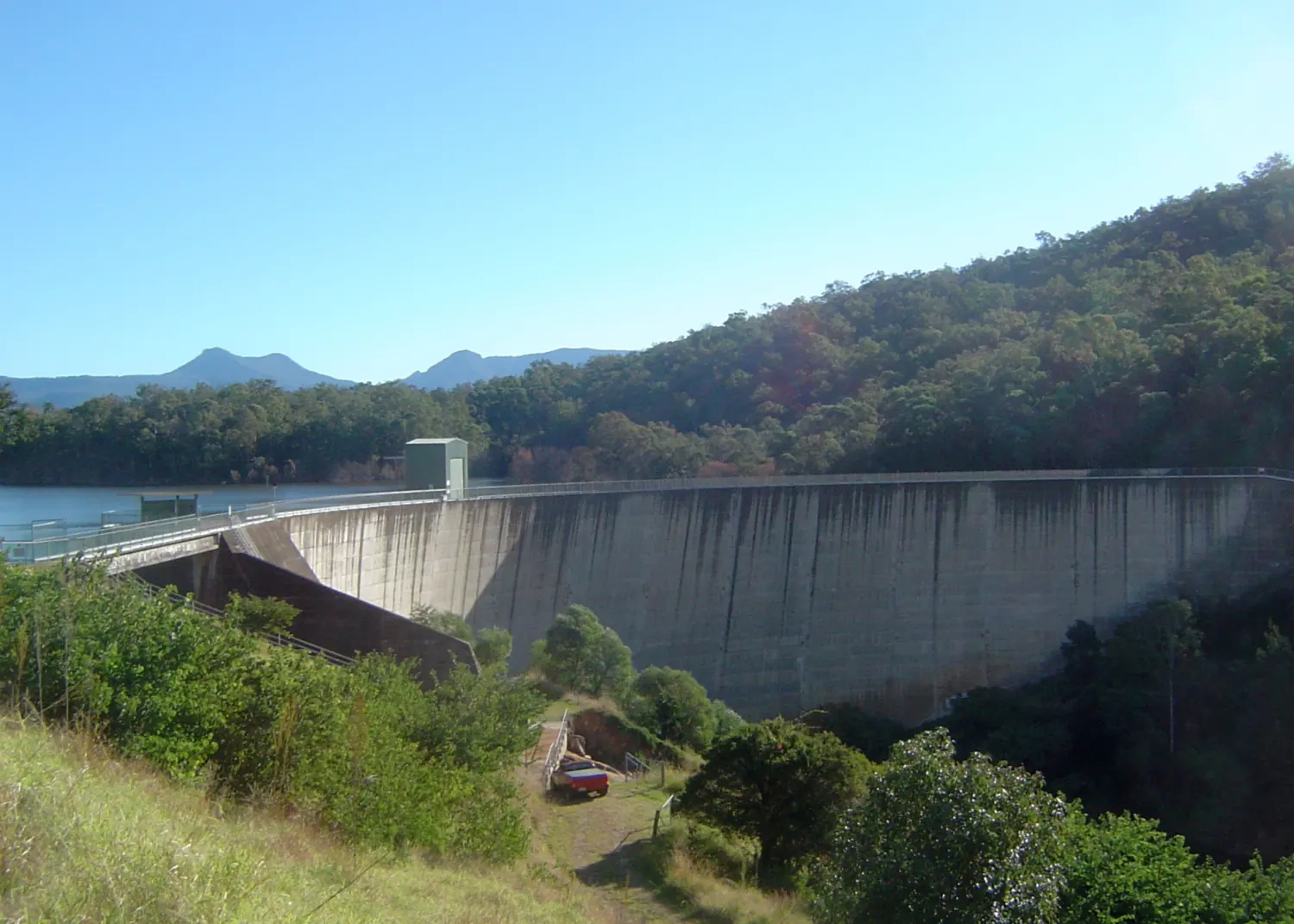
The Hedera account with the largest percentage increase in activity over the past week was 0.0.6024179, this account is the main operator account for the Water Ledger use case (waterledger.com/live). Over the past 7 days this account has been responsible for 8,627 transactions, an increase of almost 12x from its weekly average over the previous 3 weeks.
On-chain data combined with off-chain evidence reveals that this flurry of activity was Water Ledger on-boarding its largest irrigation scheme yet onto Hedera.
This use-case is particularly interesting for me, I live in Brisbane in South-East Queensland and all this is happening right in my backyard, to be honest I didn’t realise our state government water authority was using Hedera to this extent.
01What happened this week?
On 29 October 2026, our research shows Water Ledger moved Seqwater's Warrill Valley irrigation scheme in South-east Queensland onto Hedera. That's about 282 farms and other water users, and roughly 30,000 megalitres of water rights across the scheme. It's the third Seqwater scheme on Water Ledger, and the biggest yet by number of customers.
- Who: Seqwater is the Queensland State Government's bulk water supplier for South East Queensland. It runs 7 irrigation schemes for about 1,200 rural customers.
- Reach: with three schemes now live, Water Ledger covers roughly 490 of those customers, about 4 in 10.
- Size of the move: the onboarding recorded 443 water rights and 359 meters, and created 1,010 new Hedera accounts.
- Fees: 2,701.6 HBAR, about US$195. That's roughly 16 years' worth of the account's normal day-to-day fees at October's rate, almost all of it paid in a single evening.
Figure 1 · Paid for by 0.0.6024179
Massive spike in activity shows the onboarding
- Token transfers
- New accounts
- Topic messages and other
Most days the account writes about a hundred messages. The two spikes are the nights a scheme was loaded. Days are UTC.
Show the data
02This demonstrates Water Ledger’s adoption is progressing
Three of Seqwater's seven irrigation schemes are now on Hedera, all added in 2026. The first of these schemes to be tracked on Hedera was Central Lockyer Valley onboarded in March, this was followed by Cedar Pocket in September and now Warrill Valley in October. The newly added Warrill Valley scheme is the largest by customer count, though Central Lockyer tracks more water.
Based on the pattern we've seen so far, it seems likely the remaining four schemes, Central Brisbane River, Logan River, Lower Lockyer Valley and Mary Valley, will be rolled out over the coming months. Neither Seqwater nor Water Ledger has announced any plans, though.
Water Ledger also ran a trial load in June 2024 using older data from the Central Lockyer scheme.
A megalitre (ML) is one million litres. Customer numbers come from Seqwater's 2024–25 scheme reports.
Figure 2 · Setup topics, and Seqwater's own customer counts
Three of seven schemes, about 4 in 10 customers
- On Hedera
- Not yet
Bubble size is the scheme's customer count from Seqwater's 2024–25 reports. Warrill Valley has the most customers; Central Lockyer holds the most water, as it includes groundwater.
Show the data
03What it means for Hedera
As with many environmental use cases, the network fees here are small. The real signal is that a government water utility is keeping its irrigation customers' water records on Hedera, and progressively expanding their adoption over time.
- Every customer is on-chain. Each irrigator's water rights are tracked as Water Ledger tokens on Hedera: H2T (title), H2R (right) and H2W (water). Water Ledger has created 3,885 Hedera accounts so far.
- Every action leaves a permanent record. Meter readings, water trades, approvals and logins are written to the Hedera Consensus Service, so there's a tamper-proof audit trail for a regulated public resource.
Figure 3 · Setup topic 0.0.10936018
How the Warrill Valley scheme was recorded on Hedera
- Medium-priority right
- High-priority right
Each dot is one water right recorded on Hedera. Zone totals include both priorities. Boxes with an id open on HashScan.
Show the data
What does that mean for network revenue? It comes in bursts. Loading a scheme means creating accounts, sending tokens and writing thousands of messages in one go, so each onboarding costs a few thousand HBAR. The three schemes so far cost about 4,875 HBAR in total, around US$350. Day-to-day use is much cheaper: the account writes about 100 messages a day, costing roughly 0.45 HBAR a day in October.
So revenue should grow with each scheme Water Ledger adds. Four Seqwater schemes are still to come, and Water Ledger's status page lists a second live platform, the SWaN credit exchange run with Virginia's environment department (Virginia DEQ) in the US. In Figure 4, the big months are March and October, when Central Lockyer and Warrill Valley were loaded, and April, when 12,206 transfers, many of them moving water and water-right tokens between Central Lockyer customers' accounts, ran through the account. Cedar Pocket, with just 13 customers, barely registers.
These costs are based on the HBAR price on November 1, 2026 which was about US$0.072.
Figure 4 · Paid for by 0.0.6024179
On-chain activity and the network revenue it generated
- Token transfers
- New accounts
- Topic messages and other
- Transactions, Mar–Oct 2026
- 56,087
- Network revenue
- ℏ6,561≈ $547
- Token transfers
- 20,409
- Accounts created
- 2,810
Revenue is each fee converted to US dollars at the network's exchange rate on the day it was paid. Not shown: the June 2024 trial load, 14,274 transactions and ℏ1,413 (about $126).
Show the data
04How we know it's Warrill Valley
The ledger never names a place. Schemes, zones and customers appear only as ID codes. So we compared its numbers with official records, and three separate checks agree.
1. The water in each zone matches the government register exactly. Queensland publishes how much water is held in every zone of every scheme. We checked every scheme on the register we could access, and only Warrill Valley matches. It matches all six zones to the half-megalitre (Business Queensland register, as at 29 October 2026):
Figure 5 · Setup topic 0.0.10936018 vs the Queensland register
Six zones, six exact matches
- Water rights on Hedera
- Government register, 29 Oct 2026
Medium-priority water, which most irrigators hold. High-priority water matches too, in four of the five zones that have any.
Show the data
2. The totals match Seqwater's own figures. Seqwater's 2024–25 Warrill Valley report lists 282 customers, and 23,885 ML of medium-priority water allocated across the scheme. The ledger has 273 user sign-ups and 23,883.5 ML. The starting meter readings are all dated 1 July 2026, the first day of Warrill's water year (Seqwater).
3. The account is Water Ledger's, and it runs a Seqwater platform. The code behind Water Ledger's live page reads its data from account 0.0.6024179, as mentioned above. Its status page lists a "Seqwater Water Accounting Platform" as live in production.
The other two schemes tracked on Hedera
Cedar Pocket is confirmed. On the ledger it holds 495 ML of water rights and 13 user sign-ups, and Seqwater's 2024–25 performance report says 13 customers hold 495 ML.
Central Lockyer is very likely, though not confirmed. It was set up under the same Queensland water plan as Warrill Valley, with 12 zones, and most of its starting meter readings are dated 31 December 2025, the end of Central Lockyer's calendar-year water year (Seqwater). The government register for this scheme needs a login, so we couldn't check it zone by zone.
One more clue points the same way. Water Ledger's June 2024 trial load includes a 3,507 ML water class with 3,420 ML of rights in it. Seqwater's 2024–25 Central Lockyer report lists exactly those figures for the Morton Vale Pipeline, part of the Central Lockyer scheme. The March 2026 load has the same number of zones and the same volumes in almost all of its other water classes, so it's very likely the same scheme.
All in all, Water Ledger's rollout is a good example of government adoption of Hedera in practice: a platform used by a state-owned water utility, recording water rights for hundreds of irrigators on a public ledger, one scheme at a time. With four Seqwater schemes still to come, and Water Ledger already running a second live platform in the US, there's plenty of room for it to grow.
Get the next deep dive
Get an email when we publish new research on the real-world businesses running on Hedera. Or follow along on X.
05Verify our research yourself
On Hedera
- Water Ledger's operator account: 0.0.6024179
- Warrill Valley setup log, 2,473 messages on 29 Oct 2026: topic 0.0.10936018. See message 1 (the setup script starts), message 5 (the first of six zones) and message 910 (one customer's water right).
- Warrill Valley day-to-day log, with logins and trades since 29 Oct: topic 0.0.10936125
- Cedar Pocket setup log, 11 Sep 2026: topic 0.0.10854469
- Central Lockyer setup log, 21 Mar 2026: topic 0.0.10384324
- The first new Warrill account, 0.0.10935883, receiving its water-title token: transaction
Off-chain sources
- Business Queensland: Warrill Valley water allocations by zone
- Seqwater: Warrill Valley performance report 2024–25
- Seqwater: Central Lockyer Valley performance report 2024–25
- Seqwater: Cedar Pocket performance report 2024–25
- Seqwater: irrigation schemes and customers
- Seqwater scheme pages: Warrill Valley, Cedar Pocket, Central Lockyer Valley
- Water Ledger: platform status
While we try our best to ensure the accuracy of our information, please note that neither Seqwater nor Water Ledger has publicly announced these schemes going live. The identification rests on the on-chain data matching figures publicly released by Seqwater.
Sources and method
Every on-chain figure comes from Hedera mainnet via the public mirror node, up to the end of 31 October 2026 (UTC). Zone, water-right and meter figures are the decoded messages on each scheme's setup topic; water volumes are megalitres. Activity and revenue cover every transaction paid for by account 0.0.6024179, with each fee converted to US dollars at the network's exchange rate on the day it was paid. "Largest percentage increase in activity" compares each account's last 7 days with its previous 21, and excludes very small accounts and network infrastructure such as node and system accounts.
Schemes were identified by matching on-chain volumes and counts to the Queensland water allocations register and Seqwater's 2024–25 scheme reports for Warrill Valley, Cedar Pocket and Central Lockyer Valley. Photos: Shiftchange, Wikimedia Commons, CC0. This report is independent research and is not investment advice.